The Feature BeReal Never Built That Could've Saved It
Miss the old times, BeReal

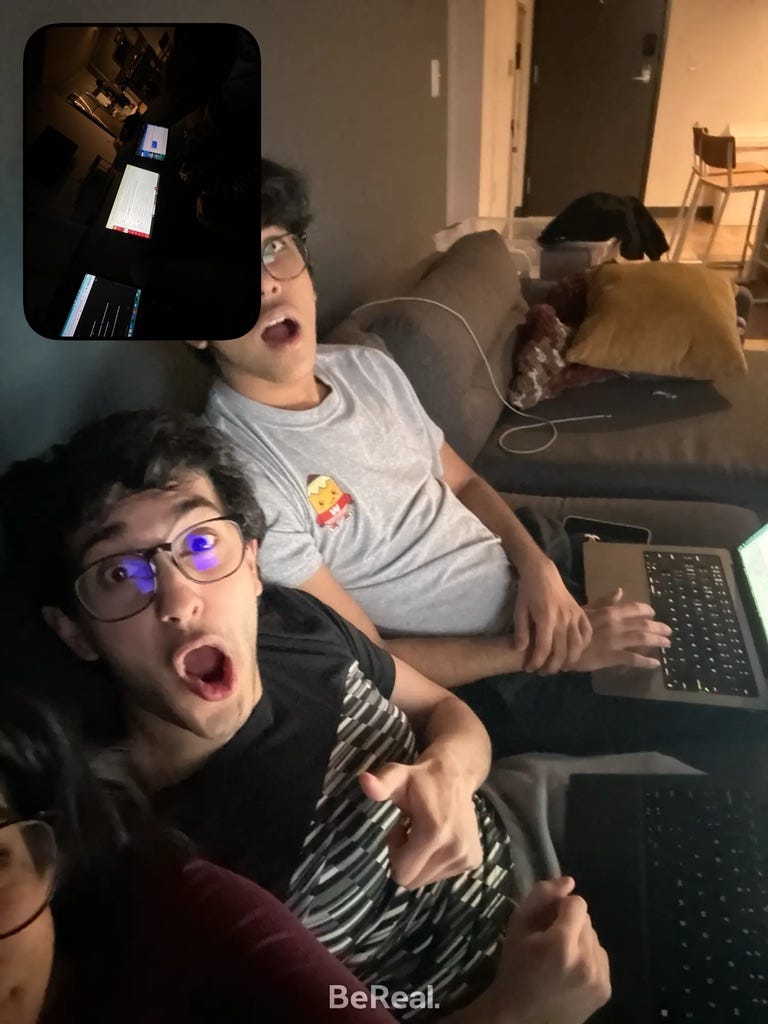
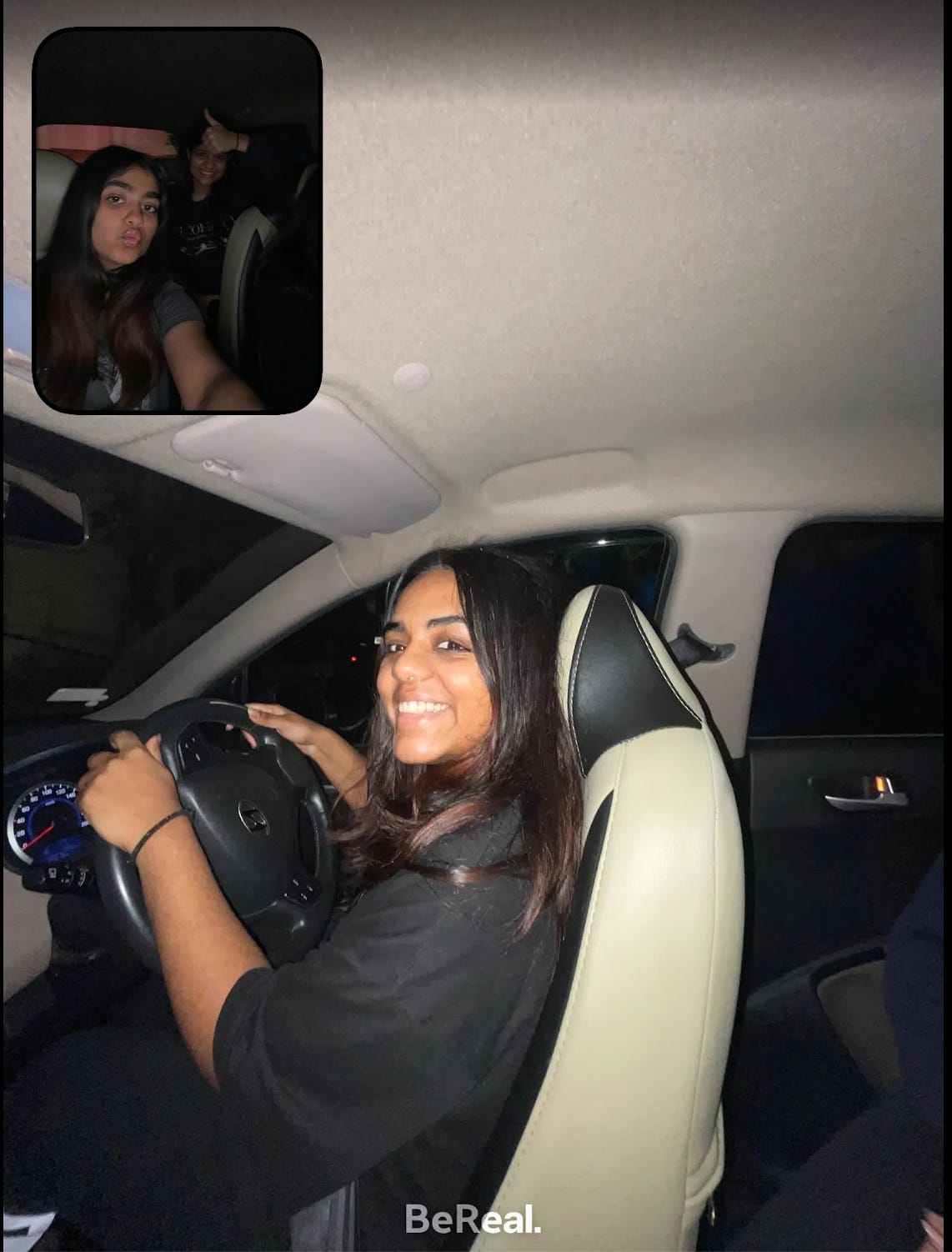
Back in 2022, I remember being obsessed with BeReal. Every time I’d get the BeReal notification, without even thinking about it, I’d drop whatever I was doing and take the photo - front camera, back camera, less than two minutes. By the end of the year, I had this entire archive of my life - random car rides, late nights, ordinary Tuesdays that I would’ve never thought to document otherwise. The yearly recap felt like reliving everything.
And it wasn’t just me. My friends were on it, my cousins, family friends all scattered across different cities and countries. The thing about BeReal that nothing else really replicated: you got a genuine sneak peek into everyone’s actual life - not the highlight reel, just whatever they were doing when the notification randomly went off.
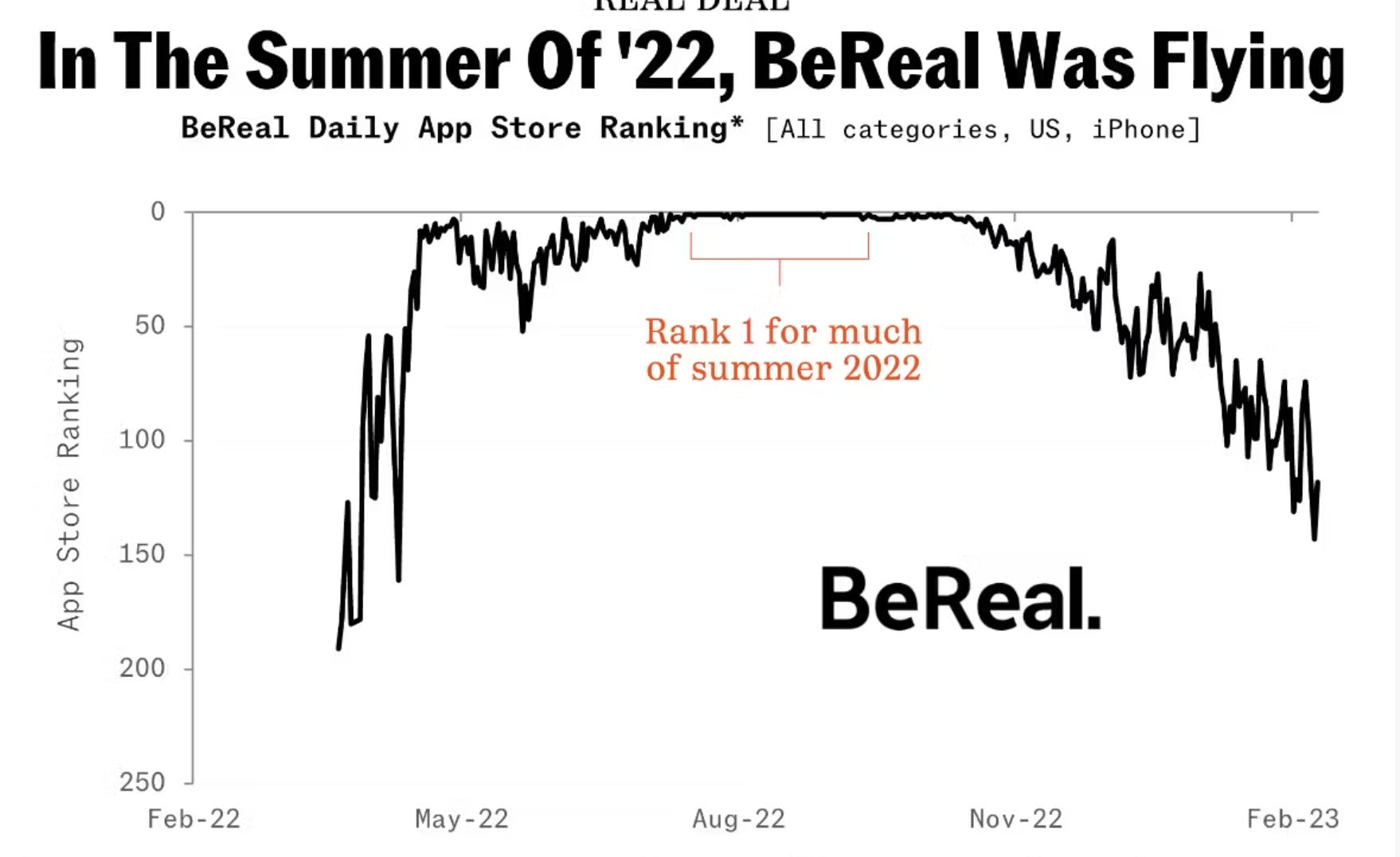
Unfortunately, people started falling off after and so did I. The strange part is that by the time I stopped, BeReal as a whole had started to feel so performative. This was so ironic because the app was literally built to make that impossible.
That’s not a user problem but rather a product problem.
To understand what went wrong, we have to understand what BeReal actually got right. And honestly? A lot.
The dual camera was the most obvious one - front & back simultaneously meant you couldn’t just show your face looking cute, you had to show what you were actually doing. The context here was backed into the format. You couldn’t post a selfie without also revealing that you were sitting in a Chipotle at 2 pm on a Tuesday.
There was no follower count - no likes, no reshares, nothing. You literally could not go viral on BeReal which meant there was nothing to optimize for. There’s a deliberate product decision and a genuine bold one, because every other social app is built around the opposite idea. It was friends only by default, not a public broadcast, not a following tab, just the people you actually knew. It felt less like a social network and more like a group chat that could see you.
You couldn’t see anyone else’s BeReal until you posted your own - my favorite mechanic. You had to be vulnerable first. That’s reciprocity built directly into the product and it’s so clever in a way most social apps never even attempt. No filters, no editing, what you took was posted and the rawness wasn’t an aesthetic decision but rather an enforcement.
The notification - random, unpredictable, non negotiable. You had two minutes and that was it. You couldn’t plan for it, which was entirely the point.
Every single one of these decisions pointed in the same direction - remove the tools people use to perform and authenticity will follow. The insight was right.


So what actually went wrong?
The easy answer is that people lost interest. But that’s not a product insight, that’s just an observation. The more interesting question is why they lost interest, and I think it comes down to one thing: BeReal slowly dismantled every decision that made it work in the first place.
Starting off with the notification. The original mechanic was simple: it goes off, you have two minutes, no exceptions. That sense of randomness was the entire product bet. But at some point, BeReal let you wait it out. You could delay your BeReal until a “better moment” came along. This basically meant that you weren’t capturing your life, you were waiting for your life to look good enough to capture. In my opinion, thats just Instagram.
Then came the retakes feature. Originally, if you retook your BeReal, a counter showed your friends exactly how many times you’d tried. That was actually a clever accountability mechanic - a little embarrassing - which is kind of the point. But over time, that friction softened and people just retook the picture until they got something they liked.
They added a Discovery tab. Strangers’ BeReals, publicly visible, effectively a glorified explore page. But the app was entirely built around the idea that your audience is just your friends. Suddenly, you could go viral on BeReal - the platform specifically designed to make vitality meaningless. That’s not an evolution of the product, that’s a contradiction of it.
But the deeper structural problem that no single feature could’ve fixed: BeReal was contagiously fragile. Since it was friends-only by default, your experience of the app was entirely dependent on your network staying active. The moment a few friends stopped posting, your feed got quieter. You opened it less and eventually you stopped too.
The cruel irony is that BeReal saw all of this happening in real time and responded by adding more features: DMs, music, a Discovery tab, bonus BeReals, unblur. People were saying on Reddit as early as 2022 “BeReal keeps adding more and more features and it’s defeating the purpose of the app.” BeReal’s answer to losing its identity was to add more things, when the identity was always built on having less.
So if I were a PM at BeReal, what would I have actually built?
Definitely not DMs, a discovery tab, not ads. Basically not anything that changes the trajectory of BeReal.
Make the notification random by day, not just time. The daily notification was BeReal’s biggest retention killer because it made posting feel like a chore. Every single day, same expectation, same routine. The novelty wore off fast. The fix isn’t to remove the randomness, it’s to amplify it. What if the notification went off on a completely random day of the week instead? You’d have no idea if today was the day. That uncertainty is actually more faithful to BeReal’s original bet than a daily alarm, because you genuinely can’t plan for it. And the scarcity makes each BeReal feel like more of an event rather than another item on your daily checklist.
Adding a prompt to the notification. “Show us your view right now” “What’s the last thing you ate” “Show us your workspace”. A single line that accompanies the two minute window and gives people something specific to capture. This solves the monotony problem without adding the performance, because you can’t plan for a prompt you didn’t know was coming. It also creates a shared experience across your friend group, everyone answering the same question at the same random moment, which is actually more communal than everyone just capturing whatever they happen to be doing.
BeReal Challenges. Periodic, time limited prompts that your entire friend group participates in together. “This week: show us your commute.” “This weekend: show us where you’re eating.” It creates a cultural moment without opening the app up to strangers or virality, you’d still only see your friends’ responses. This is the retention loop BeReal never built: a reason to open the app on days the notification doesn’t go off, something to look forward to beyond the daily post. And it’s completely on-brand because it’s still unfiltered, still spontaneous, just with more variety baked in.
The reason these would work is because it isn’t a radical change from what BeReal was actually built for. BeReal’s mistake wasn’t that it needed to be every other social media app to survive. It needed to become a more interesting version of itself. Every feature they actually shipped, DMs, Discovery, unblur, ads, pulled them further away from their identity.
BeReal’s journey isn’t about an app that failed but rather a product that had genuine insight: People were exhausted by performative social media, validated it with millions of users and then lost confidence in their own idea.
Every feature they added in the name of “growth” was really just a slow walk away from the thing that made people download it in the first place. They saw users churning and responded by becoming more like the apps people were churning from. That’s not a growth strategy, that’s a panic strategy.
DMs didn’t kill BeReal, the Discovery tab didn’t kill BeReal but rather the accumulation of decisions that each made small compromises on the core identity did. I wish BeReal protected the thing that made users care in the first place, especially when the pressure to grow is immense.
This is still fixable, I’d love to do it for you (@BeReal) :)
Until next time,
Sreya