The Default Grouping Gap
or I accidentally wrote the same post 3 times

I wrote three different posts on here and didn’t realize until earlier this week that they were all secretly about the same thing. One was about Instagram only giving you a single Close Friends list when you obviously have five different kinds of friends. One was about LinkedIn burying my actual friend's promotion under a pile of strangers posting "comment BUILD for the prompt." And the most recent one was about my recruiting buddy initiative.
Three different apps (in a way), three different problems. But every single time, I landed in the exact same place. The product is sorting people one way, and I want them sorted a different way. In my opinion, the gap has a name now, at least in my head - the default grouping gap.
What the gap actually is
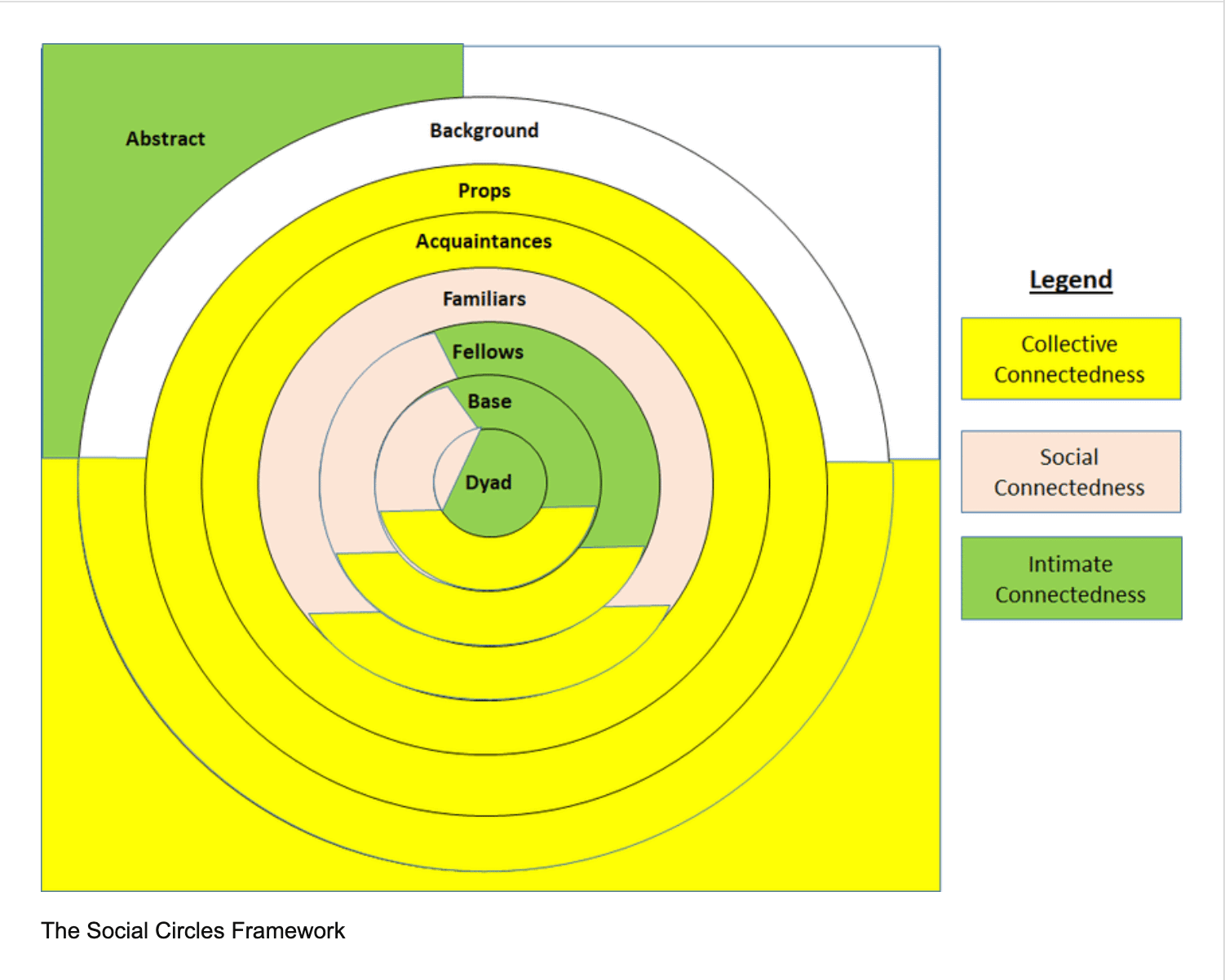
Every product that involves other people has to decide how to group those people for you. It almost always reaches for the biggest possible group, because the biggest group is the easiest thing to build as well as the cleanest thing to scale. For example, your whole network, everyone you follow or all 500 something connections.
The problem is that nobody actually lives in the biggest group. People live in small deliberate circles - your girls, your work people, the 4 people you’d actually text a job hunt question to at 11 pm. There’s a permanent gap between how the product sorts people and how you sort people in real life.
How you find it
Here’s the part that turns this from an observation into something you can actually use. You find the gap by looking for the manual work.
Every time I caught myself doing annoying, repetitive labor inside an app, that labor was the gap pointing right at itself. For example, auditing my Close Friends list from scratch every single time I wanted to post one story or scrolling back twelve days to find a promotion I genuinely cared about or even mentally ranking who in my network was “close enough” to ask for help without it being weird.
All that work I was doing to shrink the default down to the group I actually wanted? That’s the unbuilt feature. The workaround is the product.
The framework
So now when I look at any product, I run three questions:
What grouping is this product forcing on me by default?
What smaller, more intentional group do I actually want?
What manual work am I doing to bridge the two?
When all three line up, there’s something worth building.
Once you see it, it’s everywhere
Gmail filters are people carving a smaller inbox out of the firehose.
Slack DMs and private channels are the same instinct fighting the all-hands channel.
The favorites you star in your contacts, Twitter Lists, the close-friends-but-for-Spotify-Blends are all the same move.
Every single one of these is someone drawing a circle because the default circle was too big.
What is interesting is it even shows up at the company-strategy level. Spotify spent its last investor day talking about superfans - the idea that there’s no average listener, just a giant tail of casual users and a small but intense cohort who’d pay for more. That’s the Default Grouping Gap one level up.
When the default is actually fine
To be fair, the big group isn’t always wrong. There are times you genuinely want it. For example, broadcasting a launch, reaching strangers, discovery for your app. That’s the default working as intended.
The gap only matters when someone is clearly trying to shrink the default and the product is making them do it by hand. No manual work, no gap. The annoyance is the whole signal.
The takeaway:
The framework - find the default grouping, find the smaller circle people actually want and follow the manual work in between. The companies that close that gap turn a workaround into a reason to open the app every single day. The ones that don’t leave it sitting there for a third - party tool or a competitor to quietly pick it up.
So next time an app annoys you, don’t just close it. Notice what you were actually trying to do. You’re probably trying to draw a smaller circle, and the fact that it’s annoying means nobody’s built it yet.
(That someone could be you!)