LinkedIn Knows Everything About Strangers and Nothing About My Friends
or I could tell you about someone's B2B SAAS

A few weeks ago, my friend texted me “I got promoted!!” with a screenshot of the email from her company. I immediately went onto LinkedIn to show my support except when I searched for it, I realized she’d posted it 12 days ago.
This really upset me. I open LinkedIn multiple times a day but it took me 12 days to find out. I even scrolled back through my feed to find it and on the way I passed THREE “I built this SaaS in 48 hours with AI, comment ‘BUILD’ for the prompt” posts, a reshare of a reshare of someone’s thoughts on leadership carousel and two posts from people I connected with once at a networking event three years ago.
My friend’s actual update, the one thing in my feed that day that I genuinely wanted to see, was buried under all of it.
LinkedIn’s algorithm is incredible at surfacing strangers who are optimizing for reach. It is terrible at surfacing the handful of people I actually care about.
Here’s the thing: your LinkedIn feed isn’t broken by accident. It’s ranked by an algorithm that’s optimizing for engagement, comments, shares, dwell time, the stuff that continues to keep you scrolling. So, in this case, the “comment ‘BUILD’ for the prompt” posts work precisely because they’re engineered for that algorithm.
To be fair, LinkedIn does still give you an escape hatch: a “Top” versus “Recent” toggle on the feed. Switch to Recent and you get a chronological feed instead of the algorithmic one.
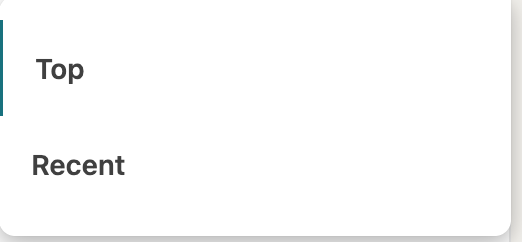
But chronological isn’t the same as curated. Recent just means you get all the same noise just unsorted by engagement instead of sorted by it. Your friend’s promotion post is still in there somewhere, just now competing with everything else in raw time order instead of algorithm order. It doesn’t help you find the dozen people you actually care about; it just changes how the haystack is arranged.
So here’s what I’d actually build: a Favorites tab, sitting right under Top. You manually pick a short list, a dozen or two people, not your whole network. Switch to it and you get a merged feed of two things: their actual posts, roughly chronological, and their career-milestone updates, new job, promotion, work anniversary.
The interesting part? LinkedIn already built it. There's a "Catch Up" tab tucked inside the My Network section that already tracks things like a connection's new job, work anniversary, or hiring status, complete with one-tap "congrats" prompts. The exact infrastructure for "never miss your friend's promotion" already exists in LinkedIn's codebase. It's just sitting in a tab nobody opens. (Source: https://techcrunch.com/2024/02/06/linkedins-new-feature-nudges-users-to-reach-out-to-people-in-their-network/)

But even if people did open it, Catch Up still doesn’t solve the actual problem. It surfaces updates from your entire network, which on LinkedIn includes the recruiter you talked to once, the person who added you after a single event, all 500-something connections. As much as you might want to know when any of your connections gets a new job, wouldn’t you rather that be curated to the dozen people you actually care about, instead of everyone you’ve ever clicked “connect” on?
The fix to this isn’t making the catch up more visible. But here’s the part that makes this pitch fun from a product first lens: once you actually break down what it’d take to build, LinkedIn has already shipped basically every piece but they just never connected them.
A tabs UI for filtering your feed - already validated. The My Network test from last year proved people will use a second tab if it shows them something different.
A system that tracks career milestones - already live. That’s just Catch Up, sitting quietly in My Network, tracking job changes and anniversaries nobody asked it to track for everyone.
List-building infrastructure - already exists. LinkedIn lets you build audience lists for newsletters and content targeting, so the “pick specific people” mechanism isn’t new either.
The only new thing is letting a user say “here’s my list of 15 people” and making sure all three of these point to that list instead of “everyone” or “first degree connections”. There’s no need for a new ML model, no new data pipeline, no new permissions system. Just letting people draw a smaller circle and point the tools that LinkedIn has already built at that circle instead of the giant one.
Okay but you may be thinking “Sreya, why would LinkedIn actually prioritize this?”
A few reasons, and I think they stack up nicely.
LinkedIn has basically told us they’re already convinced this is worth solving.
Back in early 2025, they quietly tested a second feed tab called "My Network"(https://www.socialmediatoday.com/news/linkedin-tests-connections-only-feed/741225/) that showed only posts from your connections instead of the usual algorithmic mix, as a five-week experiment.
People aren’t waiting around for LinkedIn to figure this out. There’s already an abundance of third-party tools out there whose entire pitch is building you a custom feed of “the people you actually want to see, no algorithm, no noise.” When users start paying outside companies to fix a problem inside your product, that’s not a nice-to-have anymore, that’s a retention leak with a price tag on it.
Right now, opening the app and actually finding something you care about takes effort, scrolling past AI-wrapper posts, reshares, people you barely know. Some users respond to that by overscrolling to find the good stuff or don’t open the app as much. A Favorites tab gives that second group a reason to open LinkedIn daily again, a quick “did anyone I care about post or get promoted” check. More daily opens, even short ones, tend to compound into more total engagement, the same logic that makes “low effort, high frequency” features valuable.
So the business case isn’t “this is a nice feature users will like.” It’s “users are already solving this problem with third-party tools, LinkedIn has already validated the underlying need, and the fix is mostly assembly, not invention.”
Great read, I had no idea they already have the infra to build this out properly.